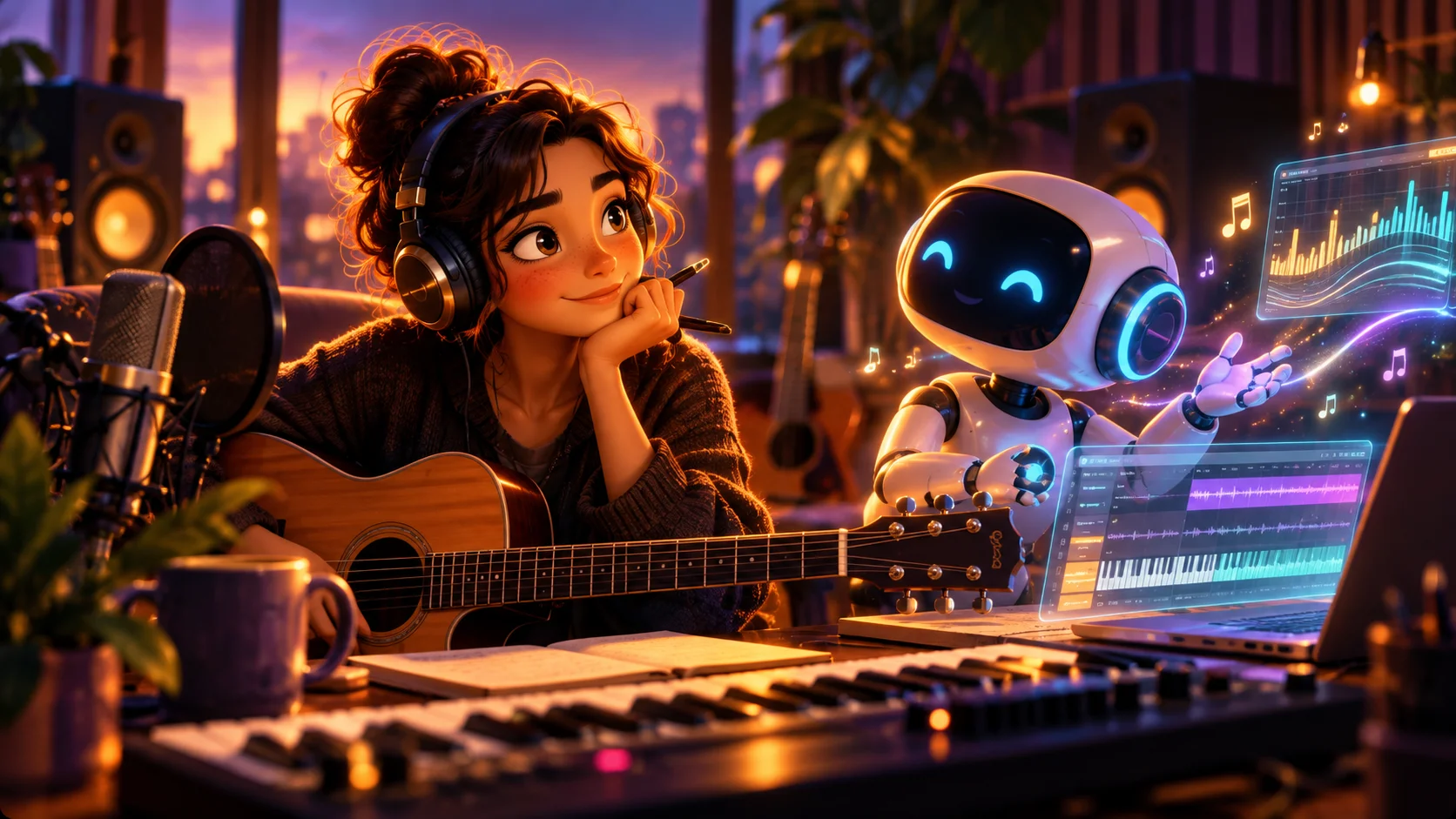
Why the Fuss?
Are there different perspectives around this subject?
The answer is yes!!!
Some people can’t sing, but they have a singer’s heart.
They hear music inside themselves. They have ideas,
melodies, emotions, and stories they want to express,
but they may not have the physical ability or musical
training to perform what they hear.
Then AI came along and gave some of those people another
way to express the singer that has always been in their
heart.
Now, I’m a performing musician writing this article,
which to some people might sound a little strange.
But bear with me for a moment.
Think about an everyday example. There are people with
physical disabilities who use technology to help them
walk, communicate, hear, or accomplish things that might
otherwise be difficult for them.
Would it be fair to tell someone with a walking
disability not to use technology that helps them walk?
Would it be fair to judge them for using an option that
is available to improve their life?
Pump the brakes!
I already know somebody is probably saying,
“Are you calling people who use AI disabled?”
No! LOL. That’s not what I’m saying at all.
I’m putting a spotlight on how quickly we can develop
double standards when new technology enters an area we
care deeply about.
Yes, it’s a dramatic example. But sometimes a dramatic
example makes us stop for a moment and look at something
from another perspective.
We all have to admit that technology plays an important
role in our lives. We use it to communicate, travel,
work, create, learn, and solve problems every day.
So why are we sometimes so quick to judge someone for
using AI technology to make music when we embrace
technology in so many other areas of life?
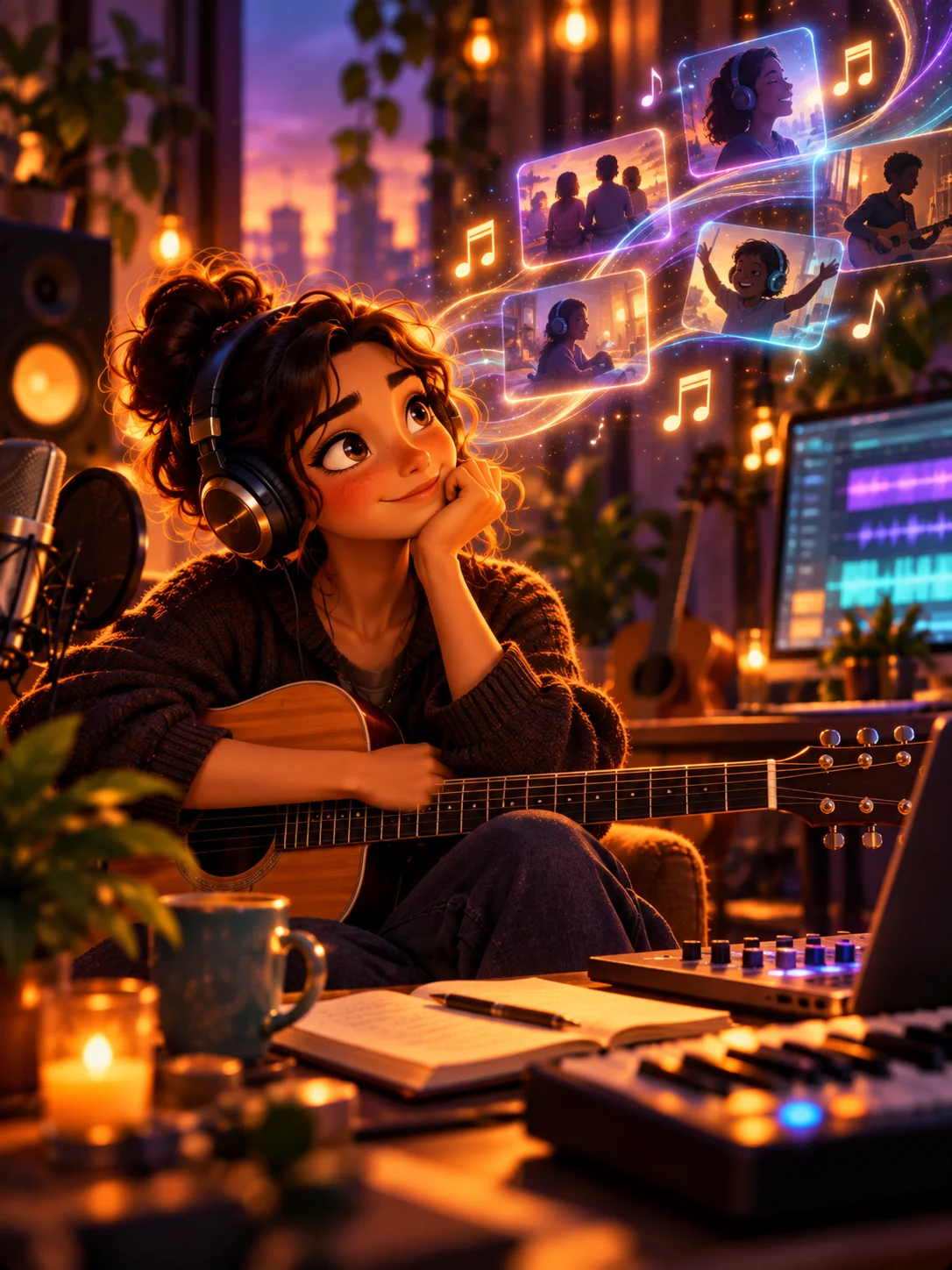
A Musician’s Perspective
Seeing It Differently as a Musician
Again, I’m a musician.
I’ve done concert tours with major artists, recorded
in many studios, and worked with both old-school and
new-school artists throughout my journey.
Along the way, I’ve met people who have a strong love
for music but couldn’t physically perform the music
they had going on inside them.
Then AI came along.
And I started seeing something different.
I saw a glow in some of those people. I saw relief.
I saw excitement because, for the first time, they had
a way to hear some of the music that had been living
inside their imagination.
And I was happy for them.
It also caused me to look at myself differently.
I realized that maybe I had taken being a musician
for granted. I became more appreciative of the fact
that I can sing, play instruments, walk into a studio,
and physically perform the ideas that I hear in my
head.
Sometimes seeing what another person cannot easily do
makes you appreciate musical abilities you may have
taken for granted.
That experience is one of the reasons I’ve become
more open to people using technology to make music.
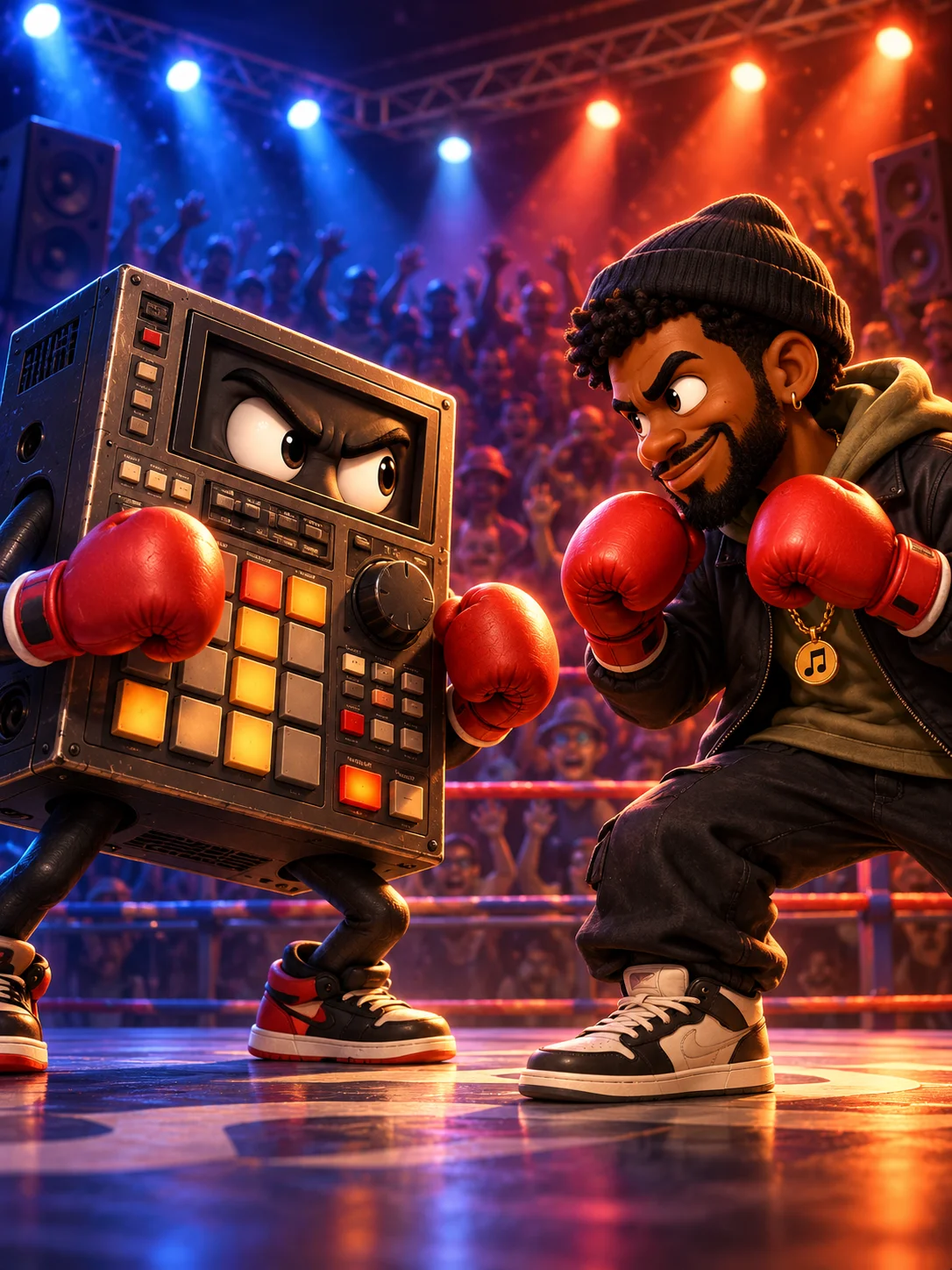
Music, Technology & History
Haven’t We Been Here Before?
Before AI music came along,
hip-hop came first.
And one of the foundations of hip-hop was sampling
previously recorded music.
Speaking as a musician, I remember how controversial
that was.
Some musicians looked at sampling and said,
“You’re using somebody else’s performance.”
To them, it didn’t feel completely different from
what people are saying about AI today.
Musicians spent years debating sampling. Some
believed it wasn’t real musicianship. Some believed
producers were taking shortcuts. Others recognized
sampling as a new creative tool and eventually an
art form of its own.
The music industry eventually developed licensing
systems around sampling, artists began getting
compensated, and sampling became an accepted part
of modern music production — even though some
musicians still don’t personally respect the process.
And now here comes AI.
Suddenly, we’re back at the table having another
argument about technology, creativity, musicianship,
and what should or should not be considered
“real” music.
I’ve learned something over the years:
people are entitled to their own opinions.
Different Perspectives
Different sides of the same conversation.
Perspective One
The Musicians
Some musicians believe using AI — or even relying
heavily on sampling — is unfair.
They spent years practicing their craft. They learned
instruments, trained their voices, studied music,
performed live, made mistakes, practiced again, and
developed their abilities over time.
From that perspective, watching someone create music
without going through that same process can feel
like cheating.
Some may even see AI users as lazy.
Perspective Two
The AI Users
But AI users can see things completely differently.
They may feel that they have an inner creativity and
a love for music that they’ve never been able to
fully express.
For them, AI isn’t necessarily about avoiding hard
work.
It can be about finally having access to a tool that
allows them to turn an idea into something they can
hear and share with other people.
And then you have another category:
The Hybrids.
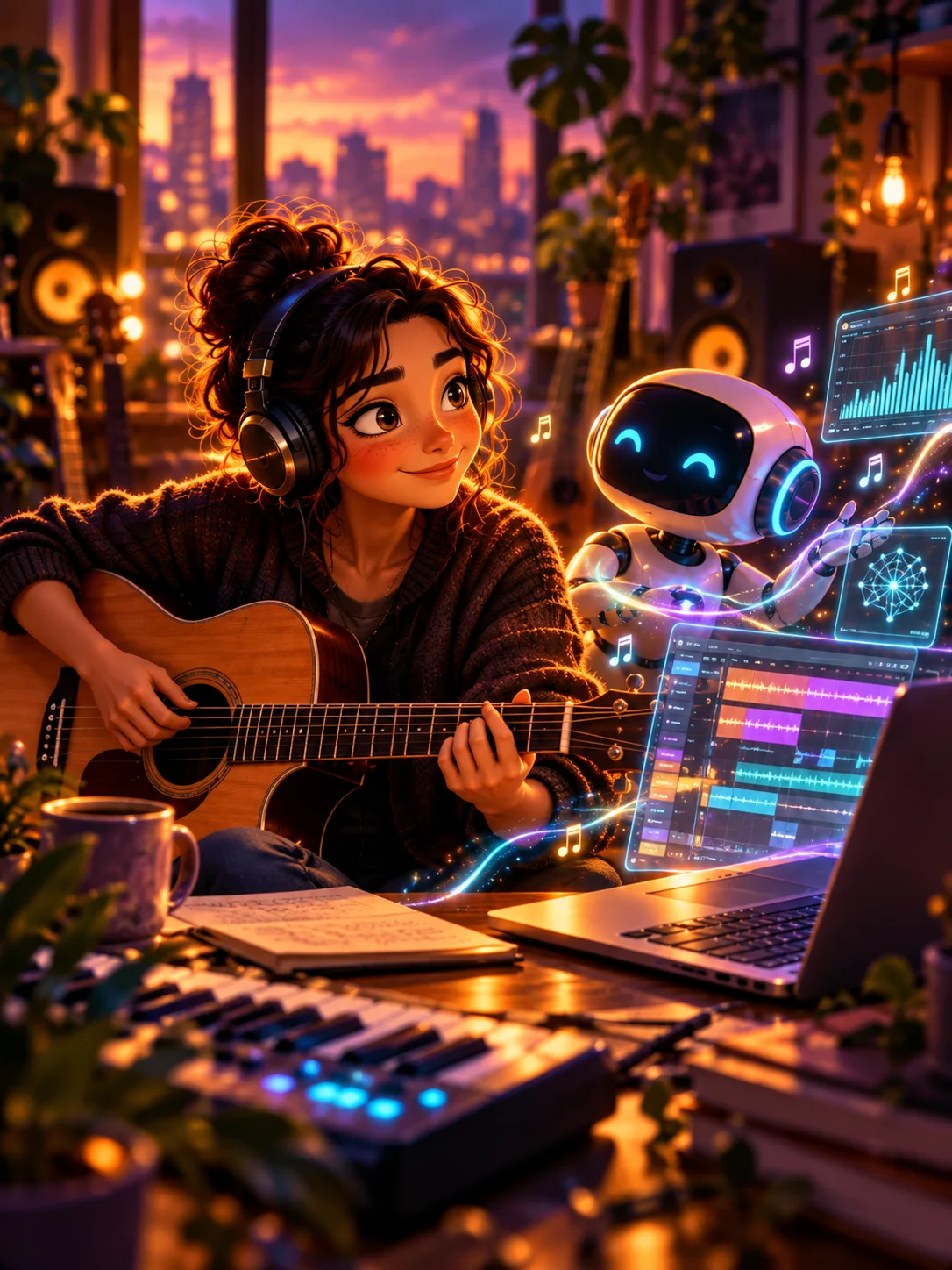
Perspective Three
The Hybrids
Hybrids have access to both worlds.
They may be able to sing, play instruments, produce
music, or perform traditionally — but they also use
AI when it fits the project.
A hybrid musician might perform one song completely
themselves and use technology to help complete another.
They might use AI to experiment with ideas, speed up
part of a production, explore arrangements, or handle
some of the heavy lifting when several projects are
happening at once.
So yes, I’m sure you can tell by now that I’m in the
hybrid category.
And that’s one reason I wanted to share my perspective
on AI music.
A lot of my musician friends and peers disagree with me.
And that’s okay.
We’ve had debates like this before.
Hip-hop sampling created arguments between generations
of musicians and producers, yet decades later hip-hop
is still here and still evolving.
AI music may have its own version of that journey.
Nobody knows exactly where it will lead, but I don’t
believe the conversation is going away.
The Question I Hear
“But You Can Sing and Play Instruments”
“So why would you
support AI music?”
My answer is simple.
Because there are music lovers out there who
can’t sing and play instruments like
I can.
They still love music.
They still imagine music.
They still hear ideas.
They still have something they want to express.
And technology has now given some of them an opportunity
to bring that music out of their hearts and into something
the rest of us can hear.
I don’t feel threatened by that.
If anything, it has made me appreciate my own abilities
even more.
Human musicianship isn’t suddenly worthless because
technology gives people new ways to create.
And technology doesn’t automatically erase the human
being behind an idea.
There is room for discussion, disagreement, boundaries,
ethics, copyright concerns, traditional musicians,
AI creators, and people who use a combination of
everything.
Maybe the most important thing is that we continue having
the conversation without automatically dismissing
one another.